


 Home
Home

 News
News

 Blogs
Blogs

 Podcast

 Photos

 Videos

 Publications


The Local Conference of Youth (LCOY) Singapore 2026 was held on 19 September 2026 at the GIIS SMART Campus Singapore, bringing together young people, policymakers, researchers and sustainability practitioners for a full day of discussion and engagement on climate adaptation and Singapore’s climate future.
Recognised under YOUNGO, the official children and youth constituency to the UNFCCC, the conference provided participants with an opportunity to understand the international climate process, engage with experts and policymakers, and develop youth perspectives on climate action in Singapore.
The conference began with a session led by Dr Linda Yanti Suliswati, who introduced participants to the United Nations Framework Convention on Climate Change (UNFCCC) and the international climate governance process. She also discussed her research and professional work, helping participants understand how international climate negotiations, research and policy are connected.
The session provided an important foundation for the rest of the conference, allowing participants to place Singapore’s climate policies and adaptation challenges within the wider international climate framework.
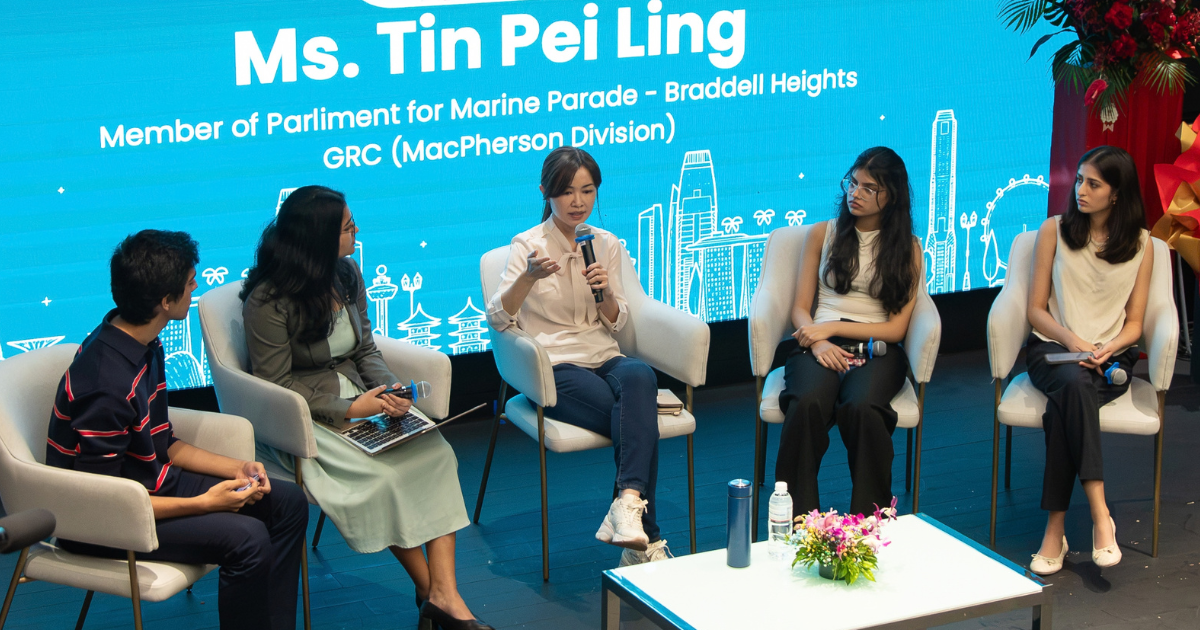
The programme continued with a student conversation with Ms Tin Pei Ling, Member of Parliament. The discussion focused on Singapore’s climate plans and the role of government in responding to climate change and strengthening national resilience.
The conversation allowed students to engage directly with a policymaker and consider how national climate priorities are developed and implemented, as well as the ways in which young people can participate in conversations surrounding public policy.
The conference then brought together experts from different areas of the sustainability and climate sector for an Expert Panel.
The panel featured Tim Wedemeyer JLL, Dr. Aniq Ahsan and Dr Linda Yanti Sulisiwati. The discussion exposed participants to different professional perspectives on climate action, sustainability and the challenges involved in translating climate ambitions into practical outcomes.The Expert Discussion Panel was moderated by Aashay Chouhan, a sustainability professional and climate practitioner.
Following the Expert Panel, participants heard from young people actively involved in climate and sustainability work. The panel featured Norlastina Hamid, who has participated in international climate processes including COP; Nikki Lee from the National University of Singapore (NUS); and Uday Singh Yadava, a climate advocate. The discussion centred on young people's experiences with climate action, the challenges of turning climate concern into meaningful participation, and the role of youth in contributing to climate conversations at both national and international levels.
Participants subsequently divided into five breakout groups, each focusing on a specific climate and sustainability issue relevant to Singapore:
Reclaimed Land and Coastal Protection
Energy Reset and Carbon Taxes
Sustainable Living and Waste
Green Commutes
Food Security
The breakout sessions provided participants with an opportunity to move from listening to active discussion. Each group examined its respective issue, discussed challenges and possible responses, and developed ideas and recommendations from a youth perspective.
The conference concluded with closing remarks and a discussion of the next stage of the LCOY process. A key outcome of LCOY Singapore 2026 is the continued development of the LCOY Singapore National Youth Statement. The ideas and recommendations generated throughout the conference will contribute to the drafting process, allowing the perspectives raised by young participants across the different sessions and breakout groups to be consolidated into a youth-led document.
The draft statement is intended to be submitted through the YOUNGO process as a youth contribution towards COP, connecting the perspectives developed in Singapore with the wider international youth climate process.
LCOY Singapore 2026 brought together international climate governance, national policy, expert knowledge and youth perspectives within a single platform. Through presentations, conversations, panel discussions and youth-led breakout sessions, participants were able to examine climate adaptation not only as an environmental issue, but also as a question of governance, infrastructure, energy, mobility, consumption and food security.
Most importantly, the conference established a platform for young people to contribute directly to the development of youth climate priorities for Singapore. The continued work on the National Youth Statement represents the next step in carrying these discussions beyond the conference and into the broader youth climate process leading towards COP.
- 0
- 0
Comments ({{totalComments}})
Login to post a comment...
{{comments.CommentText}}